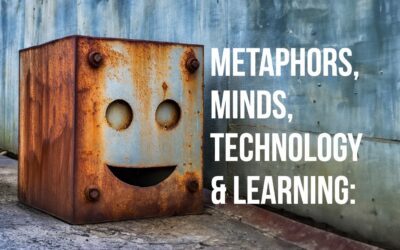
I stumbled across this little machine that shuts itself off once it has been switched on! How cool is that. I don’t have an clue whom to credit it to and would appreciate a heads up on that. I was reminded of the myth of Sisyphus which led to a great piece of hand-drawn animation on YouTube. So here they are… somewhat apt images for a dull, dreary day in mid-Michigan.
I recently received an email from a teacher in Poland, seeking advice for a curriculum outline for their Design Technology Section. They said, and I quote:
Unfortunately, I have minimal experience with the subject as a teacher or as a student in my younger years, consequently, I have little background as to what a DT class should look like.
As you might guess I’m struggling trying to put together some sort of DT curriculum for our Middle School.
Our small school does not not have any kind of fabrication equipment so our DT class is currently heavy on IT design aspects….(web design, research on a topic and devise a solution, book creation,etc… )
The specific request was for”some useful and practical information that I can implement fairly easily.”
I had written about the EduPunk movement earlier, in fact had even designed a logo for it.
A brief description of Edupunk can be found on Wikipedia (a google search will reveal many more). Wikipedia describes it as follows:
Edupunk is an approach to teaching and learning practices that result from a do it yourself (DIY) attitude.The New York Times defines it as “an approach to teaching that avoids mainstream tools like Powerpoint and Blackboard and instead aims to bring the rebellious attitude and D.I.Y. ethos of ’70s bands like The Clash to the classroom.”
Well, I am no expert on 70’s bands but the EduPunk title does appeal to me. It appeals to me because for the longest tie the main attraction of digital technology, to me, has been this DIY attitude, the fact that I can, over an evening or two, create a stop-motion movie with my kids (here or here), or mashup a commercial, or, in this case, create my own course website. The final product may not have the finish or sheen of a commercial product but it is in some key way “authentic.” It is mine. It embodies me, my sensibility, my approach, my vision in ways that other products can not.
For my entire tenure here at MSU I have constructed my own course-websites, cobbling them together with what I have often jokingly called “duct-tape and magic.” I have even written about this, long before the EduPunk moniker came along (see links at end of post). What I want to describe in this post are my current experiments (for my CEP817 Learning Technology by Design course) using using Wordpress as a learning management system, and boy am I impressed!! [My partner in crime in this is Kristen Kereluik, a graduate student in our program.]
Sir, I was reading the article in Wikipedia on ‘Samarangana Sutradhara’ (King Bhoja’s treatise on Architecture). I was of the impression that there is no translation of the work in English. Though the article says that there is a translation by you of the work, the list of your works and publications on your webpage does not include any such work. Kindly let me know if you have indeed translated the treatise. If so kindly let me know how I can access a copy.
The fact that I had translated this ancient Sanskrit treatise came as a surprise to me.
Numbers are seen as being critical to developing our understanding of a subject. As Lord Kelvin, (1824-1907) said:
… when you can measure what you are speaking about, and express it in numbers, you know something about it; but when you cannot measure it, when you cannot express it in numbers, your knowledge is of a meagre and unsatisfactory kind.
More succintly he said, “To measure is to know.” Numbers provide us (particularly academics) with credibility.
Of course this dependence on mathematics and numbers can often be misplaced. I am always impressed how we use numbers mindlessly – sometimes to levels of accuracy that don’t really convey much. I was reminded of this while reading a recent NYTimes article A Deluge of Data Shapes a New Era in Computing.
Don Norman has a great essay titled Technology First, Needs Last that I strongly recommend. We have been making a similar argument in some of our more recent pieces, see here and here…
What do you think of Norman’s ideas? Read it first and come back here to discuss what it means for teaching with technology. Can innovation in teaching only happen when we put technology first? What about content? and pedagogy?
Already every bank of any importance probably uses calculating machines. It is not likely that the fatiguing and uncertain process of having arithmetical calculations of any sort performed in the brains of clerks will survive the improvements of which these machines are capable. Account books, invoices, and all similar documents will doubtless be written by a convenient and compendious form of combined calculating machine and typewriter, which we may suppose to be called the numeroscriptor. … It will make any kind of calculation required. Even such operations as the weighing and measurement of goods will all be done by automatic machinery, capable of recording without any possibility of error the quantity and values of goods submitted to its operation.– T. Baron Russell, A Hundred Years Hence, 1906
Ken Friedman, whose article I had used as the basis of my previous posting, From incompetence to mastery, the stages dropped me an email in response to my critique. To provide some context, (you can read my full post here) I had suggested in my posting that it may be inappropriate to label the the highest level of mastery as being unconscious competence. My concern, of course, was with the “unconscious” part – since I felt that true mastery requires a level of reflection, something denied by the word “unconscious.”
Ken wrote that he actually sees examples of unconscious competence everywhere. He went on to say (quoted with permission) Read the rest of this entry »
This is a question often asked of me, when I am conducting creativity workshops or talking about passionate teaching. In fact I was asked this just a couple of days ago when I was at the Dexter Schools talking about 21st Century Learning and Creativity. This issues comes up most when I am in India where the magnitude of the problems is just so large that scalability is always an issue.
My response to this typically has been quite straightforward. I say that I can’t think that big. I have a congenital defect that renders me incapable of thinking of projects on a large scale. I cannot comprehend states and nations. I can barely comprehend a district. What I am most comfortable with is one classroom. What this does is color my way of thinking about innovation, pushing me towards the position that change can be effected one classroom at a time. When I teach my summer courses as a part of the MAET program, I usually have 25 students, a number I can comprehend. My goal is to touch these 25, to connect with them, and to raise within them a passion for using technology to teach subject matter. If I manage to touch even a fifth of them and they go back to their classes inspired to do something new and better, hey I have succeeded.
This is not to say that policies don’t matter that social change can’t happen. Just that I am personally incapable of thinking in grand generalities. I have a feeling that my skepticism regarding large scale efforts comes from my deep suspicion that visions and plans mutate in often detrimental ways when they move out of the local. So I stay in the local, and frankly that is good enough for me.
Now Scott may think that this is a cop-out and not necessarily a response to his question, but sadly that is the best I can give. The Ron Clark Academy works well where it does. Just training a bunch of teachers in the techniques used there and asking them to implement it in their classrooms will not necessarily translate into better student achievement. For instance, I am not sure that the Ron Clark approach would work in India, a country with very different cultural and historical expectations of what teaching and learning could/should be. So I choose to withhold judgment and work harder with the people I know I can influence.
Two robots made entirely using Lego Mindstorms NXT Retail-kit that can solve Sudoku problems and the Rubik’s Cube! How totally cool is that. LEGO Mindstorms is a line of Lego sets combining programmable bricks with electric motors, sensors, Lego bricks, and Lego Technic pieces (such as gears, axles, and beams). See Wikipedia article on Lego Mindstorms
See the videos below, and check out the website for the project: Tilted Twister
Sudoku Solver
Rubik’s Cube Solver
This is truly amazing… What is also great is that the designer also include directions for making these robots. I gotta get myself one of these
I had written earlier about the idea of Jugaad, the quintessential Indian idea of situational creativity. One of the masters at this is Arvind Gupta. Check out his website for tons of wonderful science toys and experiments that can be made from stuff we typically throw away. Very cool and a critical part of the kind of repurposing of artifacts we need for creative teaching.
Throwaway Technology, playful Pedagogy and powerful Content… who says TPACK needs hi-tech!
I had written earlier about how the rate of change of technology is speeding up, i.e. technologies are changing at an ever faster rate. Related to this is something I just came across today (on Kottke.org). Kottle links to a chart that provides a historical look at the speed of information travel from one point to another (in miles per hour). For instance,
For instance, in 1805 the news of the Battle of Trafalgar took 17 days to travel the 1100 miles to London; that’s a speed of 2.7 mph. By 1891 when the Nobi earthquake occurred in Japan, it only took the news one day to travel 5916 miles, a speed of 246 mph.
The 2008 Sichaun earthquake occurred 5100 miles from London with the first Twitter update in English occurring about 7 minutes after the quake started. Assuming the message was read a minute later by someone in London, that’s 38,250 mph.
In essence the speed of information travel has gone from 1.4 MPH in 1798 to almost 200,000 MPH today!! That is an amazing level of change!! Just indicates how the world we live in today is fundamentally different from the past.
In an age where experts are a dime a dozen, willing to pontificate at the drop of a pin, it is hard to tell whom to believe, and whom NOT to believe. In comes Phillip Tetlock, an academic who has made it his mission to evaluate the prognosticators! This is described in his book:
Tetlock, P.E. (2005). Expert political judgment: How good is it? How can we know? Princeton: Princeton University Press.
I recently came across a review written by him, titled Reading Tarot on K Street (in the September/October 2009 issue of The National Interest) and I thought it captured his work in this area quite nicely (and would be worth preserving).
When we score the accuracy of thousands of predictions from hundreds of experts across dozens of countries over twenty years, we find the best forecasters tend to be modest about their forecasting skills, eclectic in their ideological and theoretical tastes, and self-critical in their analytical styles.1 Borrowing from philosopher Isaiah Berlin, I call them foxes—experts who know many things and are not finicky about where they get good ideas. Paraphrasing Deng Xiaoping, they do not care if the cat is white or black, only that it catches mice.
Contrast this with what I call hedgehogs—experts who know one big thing from which likely future trends can be more or less directly deduced. The big thing might be any of a variety of theories: Marxist faith in the class struggle as the driver of history or libertarian faith in the self-correcting power of free markets, or a realist faith in balance-of-power politics or an institutionalist faith in the capacity of the international community to make world politics less ruthlessly anarchic, or an eco-doomster faith in the impending apocalypse or a techno-boomster faith in our ability to make cost-effective substitutes for pretty much anything we might run out of.
What experts think—where they fall along the Left-Right spectrum—is a weak predictor of accuracy. But how experts think is a surprisingly consistent predictor. Relative to foxes who are less encumbered by loyalties to an all-encompassing worldview, hedgehogs offer bolder forecasts and, although they hit occasional grand slams, they strike out a lot and wind up with decidedly poorer batting averages.
The implications for people who make projections about technology and schools and learning is quite obvious to me. It is the hedgehogs we need to be careful of, mainly because of the vehemence of their beliefs which can sometimes override our “foxy” nature. I say inherent because I think that educators, for the most part, are pragmatists, sensitive to the limits of arm-chair theorizing and big ideas. A hard nosed approach to reality, that recognizes its complexity, that demands multi-faceted problems solving approaches is what is needed, not being wedded to one, just one overarching idea.
Imagine controlling machines, typing text or juggling balls using nothing but the power of thought. What sounds like far-fetched science fiction is gradually becoming possible, providing hope for disabled patients — and new gimmicks for the computer gaming industry. Read more in Playing With Your Head: The Dawning Age of Mind-Reading Machines
What implications do these new technologies have for learning and education? I mean even Mattel is getting into the action… As the article says
The new system Mattel is introducing at computer trade shows is called “Mindflex.” According to the company’s fact sheet: “A true mental marathon, Mindflex exercises the brain in an entirely new way as players learn to continuously control their brain activity.”
So, you ask, how does it work? To train the brain, the user puts on a headband with sensors at the temples and a cable connected to something that looks like a mini miniature golf course. Then the user tries to master the first task: balancing a small ball above an air current, causing it to levitate and making it pass through a plastic ring.
At this time these interfaces work only in one direction, from the brain to the computer. But can the reverse, from computer to the brain be far behind? The power being discussed here is truly revolutionary. We have all known that computers are cognitive tools i.e. working with them changes the way we think. However, at some level changes in brain states are mediated via our senses and through movement, a somewhat inefficient process. What these technologies indicate is the future is in a merging of our brains directly with the computer… where the distinction between us and the machine will be increasingly blurred till we won’t be able to tell one from the other. Imagine having access to Google like search engines whenever a question pops up in our heads? How can we tell where the brain ends and the machine begins?
Stacy Clause just sent me this very cool link to an article titled Exploring logo designs with Mathematica. In this article, Chris Carlson, of the User Design Group at Mathematia shows how one can mathematically develop variations on commercial logo designs by the systematic tweaking of various parameters. As Chris says,
As starting points for design explorations, corporate logos are ideal. They often distill a single idea into simplified geometric form that is straightforward to parameterize in Mathematica. Once a logo is in Mathematica, exploring its parameter space quickly leads to the discovery of new graphic phenomena, emergent forms, unexpected relationships, and burgeoning lines of inquiry.
What does this mean for graphic design (and graphic designers)? Does it mean that computers can now do what we used to pay people to do? This could be grim news for designers, particularly when they are already under siege from democratizing Web 2.0 tools like CrowdSpring (whose tag line is “just post your project, watch the world submit ideas and choose the one you like”). Below are some of my thoughts on this issue. Read the rest of this entry »
As I read the story on the technology Review website, I came to the comments made by readers. One stuck out. This is what somebody had said:
Wow, they took the speed of light and multiplied by 2.62 then divided by 2. Interesting method of doing it, but it doesn’t take a rocket scientist for sure.
By focusing on the surface aspect of the math this person misses the point of the story almost completely. Misses, it I may add by almost the distance from the Earth to the moon. Read the rest of this entry »
I had heard of Neil Gershenfeld’s work on the Bits to Atoms Project at MIT but thought of these Fabrication Labs as being too expensive ($500,000+) or esoteric for everyday or classroom use.
But one fine day I got an email from Glen Bull from Virginia informing me of cheaper alternatives. These are computer-controlled die cutting machine that shapes paper, cardboard, and vinyl can be purchased for the same price as an ink-jet printer – that is, for less than $500. The advent of personal fabrication systems makes it possible for schools to begin exploring educational implications of the digital fabrication revolution today.
Leigh Wolf has set up a Ning group called fablabs and we just finished a meeting at SITE about these technoloies. Visit the group to see what one can do with these technologies.
The challenge of course is figuring how this technology can become an educational technology!
Edupunk seems to be a reaction against the rise of course-managements systems, which offer cookie-cutter tools that can make every course Web site look the same.
As with any neologism, there are as many meanings as there are users… here are some links if you want to learn more. First the post that introduced Edupunk to the world, and a couple more that attempt to explain its intricacies, here and here. [Note, this is not a comprehensive or even most important set of links on this topic, just what a few minutes with Google revealed to me.]
Now, the idea behind EduPunk, as Mike Caulfield describes it, “with its implication of technical accessibility, a DIY ethic, quick and dirty over grand design, and a suspicion of corporate appropriation” appeals to me a lot. It is something that Matt and I have been arguing and implementing for a while now, though of course we didn’t call it EduPunk. We often said that our course websites worked through a strange combination of “Duct Tape and Magic”. Read the rest of this entry »
Leigh Wolf just sent me this video created by the Johnson Space Center on Barriers to Innovation & Inclusion. A Google search led to this description: Read the rest of this entry »
I stumbled upon a piece (Lotus Blossom) by Young-Hae Chang Heavy Industries the other day… and it was like nothing else I had ever seen. At some superficial level it looked like kinetic typography, but both simpler and more complex at the same time. For a while I didn’t know what was going on, but, slowly and surely, I got caught up in the flow of the music and the text, the resonances and dissonances. This was something quite different, and new with a creative and yet uncompromising aesthetic sensibility. Murakami (see here and here) came to mind, for some reason. Read the rest of this entry »
Facebook has a couple of apps that allow you to map your friends’ network. I knew about them but hadn’t really played with them till Matt Koehler asked for some ideas to use in his 956 (Mind, Media & Learning class) and I suggested trying some of these tools out. To cut a long story short, a bit of mucking around (and following some leads sent in by Leigh Wolf) I ended up with two tools: Friendwheel and TouchGraph Read the rest of this entry »
Here is a cool video about a “a mechanical, binary adding machine that uses marbles to flip the bits” – in other words a computer made of wood, that works at a pace that we can grasp! Marvelous. (HT: Collision Detection). Check out the video:
Scott McCloud is a pioneer in his field – the field of comics. (I had previously posted about him here). I just discovered (via Presentation Zen & Matt Koehler) a TED talk he had given back in 2005. It is a wonderful introduction to McCloud the man and his ideas. Worth viewing in full.
Of particular interest to me (given my TPACK leanings) is his idea of a “durable mutation” by which a old genre (that of comics) can realize its true potential given the capabilities of this new digital medium. This connection between form and function, style and substance is not easy to achieve, and McClouds ruminations on this issue are profound and inspiring. Watch the video, below:
This is a wonderful argument for Darwinian evolution since it points not to perfection (which the deniers of evolution can point to as well as example of divine intervention) but rather to imperfection (which is somewhat more difficult to explain by non-evolutionists – why would an all-powerful deity make mistakes). The lesson here is that imperfections point to a contingent historical past. Tracing these imperfections allows us to make inferences about how things came to be. Think of the Qwerty keyboard, to take an example from technological evolution, an artifact from the days of early manual typewriters, that actually required a design that would slowdown people’s typing speed to prevent the keys from getting stuck.
T. H. Nelson coined the word “hypertext” and more than anyone else, and much earlier than anyone else, truly understood how computing technology would change the text and print. One of my most treasured possession is a copy of his double-book (“Computer Lib: You Can and Must Understand Computers Now” and “Dream Machines: New Freedoms Through Computer Screens — a Minority Report”) that I bought from a garage sale back when I was a student at Illinois. These books in their choppy, “cut-n-past” and fragmented design seem to invite browsing (rather than reading) and in some strange way (at least it seems so in hindsight) foreshadow the kind of reading we do on the web today.
However, there is one significant way in which the web today is different from TH Nelson’s original idea. Read the rest of this entry »